

Stuck in the Hunger Cycle:
Insights from the community-based research project into challenges and opportunities faced by those who are employed and experiencing food insecurity.
- What We Heard: An Overview
- Community-Based Research
- Respondent Demographics
- Food Insecurity Among Project Participants
- The Loop of Survival Over Progress
- The Hunger Cycle
- Additional Factors Keeping People Trapped
- The “Ideal Job” – and the Barriers to Attaining It
- 1. Self-employment and flexibility
- 2. Reliable, stable income
- 3. Proximity to work and transportation
- 4. Work-life balance
- 5. Education and skill barriers
- 6. Lack of recognition for non-Canadian qualifications
- 7. Disability and health needs
- 8. Dignity and fulfillment
- 9. Systemic barriers and employment practices
- 10. Hopes for the future
- Accessing Government Programs
- The Way Forward
- Control Inflation and Taxes
- Improve Work-Related Support
- Expand Income Support and Remove Barriers to Access
- Conclusion
- Acknowledgements
What We Heard: An Overview
“It’s really hard to have that big picture when you’re just kind of keeping your head above water.”
In 2024, Food Banks Canada (FBC) conducted a community-based research (CBR) project in collaboration with individuals who are experiencing food insecurity despite being employed. This group is a growing but often overlooked segment of the population. By focusing on lived experiences and valuing community expertise, the study aimed to better understand the intersecting factors, systemic challenges, and structural inequities that make it difficult for many people to thrive and drive working people into crisis. Employment is typically assumed to provide stability, but our findings reveal that many workers continue to face significant challenges to their ability to meet their basic needs.
This study looked in-depth at the key barriers and challenges that employed people who are experiencing food insecurity face in their daily lives. Through detailed interviews and focus groups, participants shared not only the hardships they face but also thoughtful recommendations for change that offer a powerful roadmap for action.
In addition to experiences of hunger, meal skipping, and inability to afford balanced meals due to financial constraints, participants described complex and interrelated challenges affecting their access to supports and stability both within and outside of the labour market. These challenges included the following:
- Wage and cost of living gap: Inflation outpaces wages, forcing many people to choose between essentials such as food, housing, and health care.
- Inadequate government support: Many people miss out on getting the help they need because eligibility criteria and application processes for government support programs are often complex and difficult to navigate.
- Barriers to employment: A lack of affordable childcare, transportation, and flexible work options disproportionately affects caregivers, persons with disabilities, and rural residents and limits their job access and stability.
- Barriers to employment for internationally trained professionals: Many people who have trained outside of Canada face long, costly accreditation processes to have their credentials recognized here. This leads to their being underemployed and facing financial strain.
- Employment instability: Many workers rely on finding work through temp agencies. That work is often insecure and comes with low wages and no benefits.
- Systemic barriers and discrimination: Participants face a range of systemic barriers, including employer bias against persons with disabilities, language barriers, and lack of accountability in hiring practices, including limited mechanisms to identify, challenge, or address discriminatory practices. These affect participants’ financial stability and self-esteem.
Several opportunities and areas for action were suggested. They included the following:
- Calls for livable wages.
- Price controls on necessities, and no taxes on essential goods.
- Accessible training and education, including paid training and skill development.
- Better communication about available supports to improve employment opportunities.
Overall, participants were seeking stable, fair-paying jobs that provide fulfillment and respect and government policies that remove barriers to employment and offer comprehensive support.
Community-Based Research
In order to better understand the complexity of food insecurity among people who are employed and experiencing food insecurity, we used a Community-Based Research (CBR) approach.
CBR is a collaborative approach to research that actively involves community members, organizations, and researchers in all aspects of the study. It values the knowledge and lived experiences of community members, which ensures that the research is grounded in the real-life context of those most affected by the issue being studied. In the context of food insecurity, CBR helps identify the unique challenges and strengths within a community that traditional research methods might overlook or miss. By engaging directly with people who experience food insecurity, the study can produce more relevant, culturally sensitive, and sustainable solutions that truly address the community’s needs.
Using a mixed methods research approach that included both qualitative and quantitative research instruments such as surveys and interviews, peer researchers (PRs) explored how employment issues and rising inflation are affecting people living in Canada. The findings came from the analysis of 87 in-depth interviews, 90 surveys, and 83 memos from the researchers. The analysis included insights from people who shared their lived experience to help the researchers develop a deeper understanding of the research participants’ experiences. Working with people with close connections to food insecurity, including people with lived experience and local food bank workers and volunteers, made it possible to gather rich insights from the people who will be most affected by the research.
The PR team was made up of eight individuals from British Columbia, Saskatchewan, Alberta, and Ontario who have lived experience of food insecurity or have worked for or volunteered with food banks in their respective communities. They were passionate about the project and dedicated to helping bring about change. Their expertise, diversity, and insight led to a deeper, richer understanding of the topic of the project. The PRs were involved in recruitment, data collection, and certain aspects of data analysis. They received ongoing feedback and guidance through virtual meetings with the project team.
Respondent Demographics
Most participants in the CBR study were women (63%); and most were from Ontario (37%), followed by BC (36%), Alberta (15%), Saskatchewan (10%), and Yukon (1%).
Among the respondents, 9% identified as newcomers to Canada, 15% reported living with a disability, and 43% required a special diet. Nearly half (48%) reported having no children living at home; 37% were married and 37% reported they were single.
Almost half (44%) of the study participants listed high school as their highest level of education. Most reported being in full-time employment (36%); 14% were in part-time employment, 13% were self-employed, 12% were employed in casual on-call day labour, and 7% reported experiencing short-term unemployment (under a year).
Another 7% were unemployed, and 3.3% were in long-term contracts (more than a year). More than half the participants (53%) reported that they rent their home. Only 20% owned their home. The balance had a range of other living arrangements or preferred not to answer.
The vast majority of the respondents are living in households experiencing moderate to severe food insecurity. Most reported having low to mid-range incomes. Just over half had an annual income of under $35,000, and 30% were earning between $35,000 and $55,000. These income quintiles are more likely than people in other income quintiles to report that they will have to access a food bank or similar organization within the next six months1 (see Table 1).
Table 1. Overview of respondent information in CBR project
| Demographic Category | Percentage |
|---|---|
| Province | |
| Ontario | 37 |
| BC | 36 |
| AB | 15 |
| SK | 10 |
| Yukon | 1 |
| Gender | |
| Male | 35 |
| Female | 63 |
| Prefer not to say | 2 |
| Age | |
| 18-24 | 6 |
| 25-34 | 30 |
| 35-44 | 30 |
| 45-54 | 19 |
| 55-64 | 15 |
| 65+ | 1 |
| Race/Ethnicity | |
| European/Caucasian | 67 |
| Indigenous | 11 |
| African American | 8 |
| Hispanic or Latin | 1 |
| South Asian | 9 |
| Prefer not to answer | 3 |
| Marital Status | |
| Married or common law | 37 |
| Single | 37 |
| In a relationship | 8 |
| Divorced or separated | 13 |
| Widowed | 4 |
| Employment | |
| Permanent part-time | 14 |
| Permanent full-time | 36 |
| Temporary short-term contract* | 7 |
| Fixed-term contract* | 3 |
| Self-employed | 13 |
| Unemployed | 8 |
| Casual on-call | 12 |
| Prefer not to answer | 7 |
| Annual Income | |
| Up to $24,999 | 25 |
| $25,000 – 34,999 | 25 |
| $35,000 – 44,999 | 18 |
| $45,000 – 54,999 | 13 |
| $55,000 – 64,999 | 6 |
| $65,000 or higher | 13 |
*Short-term contract = less than 1 year; fixed-term contract = 1 year or more.
Food Insecurity Among Project Participants
To assess whether interview respondents were living in food-insecure households, we used the six-item short form of the Household Food Security Survey Module developed by the Economic Research Service of the United States Department of Agriculture (USDA).2 This six-item module is a shortened version of the original 18-item measure and has been widely used in both U.S. and Canadian research. In Canada, the full 18-item module has been adapted and implemented by Health Canada and Statistics Canada for national surveys, with similar wording and conceptual framing (Health Canada, 2007).3The responses indicate a high prevalence of food-related hardship among participants, with many reporting multiple indicators of food insecurity over the past 12 months, as detailed below.
- 87% of respondents reported that the food they bought did not last and that they could not afford to buy more.
- 89% of respondents reported that they could not afford to eat balanced meals.
- 73% of respondents reported eating smaller meals or skipping meals because there was not enough money for food.
- 70% of respondents reported eating less than they felt they should because there was not enough money for food.
- 55% of respondents reported that, in the past 12 months, they were hungry but did not eat because there was not enough money for food.
“The rising cost of living is pushing individuals and families into heartbreaking compromises, where dignity is sacrificed just to survive. Rent consumes most of their income, leaving little for food, let alone nutritious meals. People are forced to stretch every dollar, filling meals with starches instead of proteins, skipping toiletries, or pawning personal treasures just to put food on the table. Even seemingly minor policy changes, like the elimination of free grocery bags, impose new costs that hit low-income households the hardest. For those living on low wages or disability benefits, basic survival has become a daily struggle, and food is often the last priority after bills and taxes. These are not isolated choices, they reflect a deeper crisis of affordability and the urgent need for policies that ensure no one is left hungry or humiliated simply trying to get by.” — Dan H., lead peer researcher
“Rent is more than half of what I have been taking in so that causes me to really reassess what kind of foods I can [eat].”
“You can add a lot of breadcrumbs to a meatball before the kids notice.”
“I’ve had a woman pawn her engagement ring and she was bawling because she didn’t want to do it, but she had no choice it was that or no food.”
The Loop of Survival Over Progress
“When you’re in survival mode you don’t think about what job you want, you think about what will literally get on my food on my plate today!”
Themes emerging from the interviews showed that the factors that lead to food insecurity — for example, low income and lack of adequate support — also insidiously perpetuate it. Moving forward becomes less likely, if not impossible, when day-to-day survival requires all of one’s (limited) resources.
“Many people feel trapped in a relentless cycle of low-wage work, where the urgent need to pay bills overrides any opportunity to invest in a better future. The desire to improve, through training, education, or a career change, is strong, but the reality is that time and money are luxuries they simply can’t afford. This creates a loop of survival over progress, where individuals are forced to prioritize immediate needs over long-term goals. As one peer researcher observed, the frustration is palpable: people are not lacking motivation — they’re lacking access. When you’re barely keeping your head above water, the ‘big picture’ becomes a distant ideal, overshadowed by the constant pressure to make ends meet.” – PR Reflection
The Hunger Cycle
A key element of this loop was described as the “hunger cycle,” a sustained loop of events and circumstances that profoundly affect a person’s well-being and ability to cope and move forward.
“There are roadblocks at every turn.”
“As a single mother of two teenage kids, you’ve got to work your butt off in order just to survive. That’s all you’re doing is just working to survive.”
“All that I am doing is chasing the money and not actually able to enjoy it. I just hope at the end of the month I have enough to pay all my bills.”
Figure 1. The Hunger Cycle
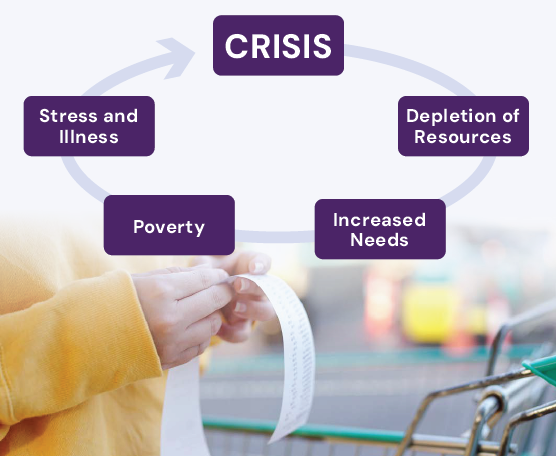
Figure 1 illustrates the cyclical nature of poverty and the interconnected factors that sustain it. Participants noted that the cycle often begins with a crisis. That crisis leads to the depletion of resources as individuals or families attempt to manage its immediate impacts. As their resources diminish, their needs increase, creating further financial and emotional strain. An ongoing struggle to stay afloat of this type reinforces poverty, as it limits opportunities for recovery or improvement. Over time, the stress and illness resulting from such a cycle makes individuals more vulnerable to future crises, which perpetuates the cycle. Poverty is maintained through a continuous loop of crisis, resource depletion, and increasing vulnerability.
A related observation was discovered in a Statistics Canada study exploring the association between food insecurity and stressful life events. The study showed that people who experience stressful life events — for example, losing a job or income, being a victim of a crime, suffering a serious injury or illness, or dealing with family or relationship stress — have an increased risk of experiencing greater food insecurity for up to two years into the future. It also found that an adult who experiences two or more stressful life events is three or more times more likely to be food-insecure than someone who has experienced no stressful life events.4
“Why waste all this money to do something, try and make yourself better, but there are hardly any options.”
“I work 40 hours a week in an entry-level job, and I can’t break out of the cycle.” – PR Reflection
“A recurring theme that emerged in interviews was the overwhelming sense that hunger is not a result of personal choice, it is something people fall into due to forces beyond their control. Whether born into poverty, struck by illness or injury, or faced with a sudden disaster or family crisis, participants consistently shared how life circumstances, not decisions, led them into a cycle of food insecurity. Once caught in that cycle, escaping it proved to be extraordinarily difficult. Many Canadians hold onto the belief that hard work leads to self-sufficiency, but those we spoke with described a much harsher reality: one marked by relentless barriers. As financial strain deepens, so too does the emotional toll. Many described mounting stress and anxiety, with mental health struggles becoming an added burden, transforming hunger from a symptom of hardship into a crisis in its own right.” – PR Reflections
“Life has become so unpredictable for him. He never knows when EI is coming in, he doesn’t know what next big, unexpected expense he’s going to be hit with and is constantly living in a state of uncertainty.” – PR Reflection
In addition to food insecurity, participants were facing stress and anxiety, depression, illness, and disability. Many spoke about caring for family members, including aging parents and children. Some participants who reported they were struggling to get by commented that they could not afford the childcare they needed to be able to work and that they could not find a job that offered the flexibility and support they needed to balance all their commitments.
“She can barely get by with her day-to-day expenses in this economy, so she’s had to put her own dreams and aspirations aside as they’re not financially attainable.” – PR Reflection
“She is working hard to stay employed and not access social programs, but things are coming to a point. After our call, she asked me how to register for the food bank.” – PR Reflection
Additional Factors Keeping People Trapped
In addition to the factors discussed above, participants discussed how some aspects of the job market contributed to the inability to progress.
They highlighted three key work-related barriers that kept them “trapped” in a challenging economic situation: difficulty getting a “good” job, the costs of becoming job-ready, and the costs associated with having a job. (See Figure 2.)
Figure 2. Work-Related Traps and Barriers
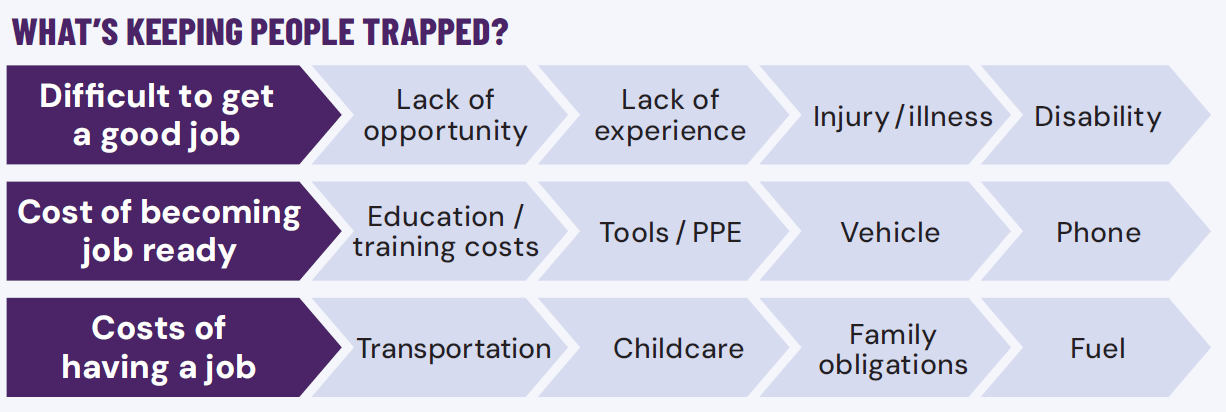
Many individuals struggle to get a good job because of lack of opportunity, limited experience, injury or illness, or disability. Even looking for work can be expensive — the costs of education or training, tools or protective equipment, a vehicle, and a phone all create additional challenges. Furthermore, even when people find work, they often face extra expenses because they need to pay for childcare and transportation or fuel to get to work. They may also have family obligations that are difficult to meet when they are working. Participant narratives highlighted how inadequate access to jobs and the financial burdens of preparing for and maintaining employment can trap people in hardship.
A key theme that emerged among respondents in the labour market who were not able to improve their financial position was the costs associated with trying to obtain a higher-paying job. Those people bore the double burden of not being able to get by and not being able to improve their situation because of a lack of money. The unaffordability of basic necessities such as housing and food, as well as other ancillary costs such as childcare and transportation, impacted participants’ ability to access and maintain employment. These challenges were exacerbated by the high rate of inflation, which has driven up the cost of essentials such as food, gas, and baby supplies.
For people without stable housing, access to a phone, or a place where they can clean up, the barriers to employment are nearly insurmountable. When survival takes priority over long-term planning, the idea of pursuing meaningful work becomes a luxury.
“You have to prioritize what is more important, eating or keeping a roof over your head. It is very difficult.”
“Even working 40 hours a week at a little over minimum wage, I can still barely afford to pay my rent. How am I supposed to also feed myself?”
“I live on my credit card. The debt just keeps creeping up on me.”
The “Ideal Job” – and the Barriers to Attaining It
In participants’ descriptions of their ideal job, the themes that emerged highlighted not only the elements of what they would consider a “good” job but also the barriers discussed above. In many cases, these barriers were intertwined. Ten core themes relating to the ideal job and barriers to finding one were identified.
1. Self-employment and flexibility
- Many individuals value self-employment for the flexibility it gives them, especially around family responsibilities (e.g., homeschooling, caregiving). However, self-employment income is often inconsistent, people may have to work long hours, and there is little to no support, including benefits, income protection, and paid leave.
- An ideal scenario would be self-employment with financial support, such as wage supplements during lean periods.
“Being self-employed there isn’t consistent work so when you get paid you have to be careful with your spending.”
“Give public assistance to people who are self-employed; we need to be able to have a pension and benefits like people who are employed by big companies; give more support to rural folks who work on family farms and in the construction business because we don’t have support.”
2. Reliable, stable income
- A consistent income that covers basic living expenses is a top priority.
- Many respondents noted that the minimum wage is not enough to live on, especially with inflation and the rising costs of basic necessities such as housing, food, and transportation.
- An ideal scenario would be a full-time, permanent role — not a contract or part-time role.
“When you only make $17/hr, 3 days a week, it doesn’t leave a lot when you have bills and carbon tax. Everything has gone up so by the time it comes, and I’m on disability as well, even with that, we have a hard time once everything is said and done. Food comes last.”
“The problem is that the inflation has gone up, groceries have gone up, gas in your car has gone up, bills have gone up, but our wages have not gone up . . . so it’s hard to make ends meet.”
“Wages haven’t met the inflation yet so it’s a kind of 1 step forward, 2 steps back type of thing.”
3. Proximity to work and transportation
- Finding work close to home is highly valued as it would reduce commuting costs and stress.
- Poor public transit and high travel costs are major barriers to ideal employment opportunities.
- An ideal scenario would be a job within walking distance of home or easily accessible by bus.
Transportation is a critical, yet often overlooked, barrier to employment — especially in rural communities. Without access to reliable public transit, many people are forced to rely on personal vehicles. This makes commuting a major financial burden given the combined costs of buying and maintaining a vehicle and buying fuel. Transportation costs account for half or more of some participants’ paychecks, and some participants are entirely excluded from job opportunities because they cannot afford a car or fuel. The high cost of travelling to attend training for mandatory certifications or daily work, combined with the rising costs of basic necessities such rent, utilities, and food, makes it nearly impossible to get ahead — even for those who are employed.
“The cost to drive [to work] is half your paycheck.”
“There’s no public transportation [in rural Canada]. I know a lot of people that can’t find work because they don’t have the means to buy and maintain a vehicle.”
4. Work-life balance
- Many participants would prefer part-time or flexible hours to accommodate their caregiving, health, or education commitments (e.g., four days/week, 30 hours/week).
- Parents, especially mothers, seek roles that align with their children’s schedules.
- An ideal scenario described by participants involved flexible scheduling and modified duties within a stable employment context, paired with supportive workplace cultures that recognize caregiving and health needs and make workers feel valued rather than penalized because of their circumstances.
“An employer that would be flexible enough for modified duties. But something that makes you feel valued.”
“The oil field is tough on families. I was never home, and it cost me my marriage.”
“Affordable childcare is just as much of an infrastructure need to get to work as suitable transportation.”
“I have had opportunities to have a high paying job, but it is not feasible without childcare.”
Participants noted that family responsibilities such as caregiving for children and aging parents limited their work options. For many, the lack of affordable, accessible childcare makes it impossible to accept or maintain full-time or higher-paying jobs, particularly in rural or underserved areas where afterschool care is nonexistent. Caregiving responsibilities, whether for children or aging family members, are forcing people — especially women — out of the workforce or limiting their job options.
“Childcare is a major barrier. The issue she faces here is that her child is only 10 years old and cannot be left alone for long periods of time in the evenings when the liquor store is open. There is no after-school care available in her small community. Even if it was, she would not be able to afford it.” — PR reflection
5. Education and skill barriers
- Numerous individuals struggle with the cost of and access to further education or training.
- Grants and easier pathways to training would make upskilling more accessible.
- Many participants advocate for more weight to be placed on skills and experience than formal education.
- In an ideal system, workers could upgrade or retrain without financial strain, access flexible and fully funded pathways into higher-paying roles and have their lived experience and on-the-job skills valued equally to formal credentials allowing for real career mobility over the life course.
Participants’ recommendations for change involved affordable or fully funded training opportunities that are flexible and accessible, alongside employment practices that value lived experience, transferable skills, and on-the-job learning as much as formal education.
“There’s no support for him to retrain/upgrade so he can make more money.” — PR reflection
“She is working in the field she trained for. She has no additional certifications. She has been doing the same job for 20 years with no pay raises or bonuses. In fact, the workload has gone up which means she is actually making less.” — PR reflection
“[She] works very hard and long hours in her late 50’s. There is no time or funds to re-train. She is stuck. Very little hope. This is heartbreaking.” —PR reflection
6. Lack of recognition for non-Canadian qualifications
- Several participants mentioned they are underemployed and working in roles that do not reflect their qualifications.
- High costs, long licensing processes, and lack of recognition were noted as significant hurdles to people who trained or qualified in their profession outside of Canada.
- Participants’ recommendations for change include faster and more affordable accreditation pathways.
- In an ideal system, internationally trained workers could transition into roles that match their qualifications through fast, affordable, and transparent accreditation processes, with language supports and employer recognition that prevent people from having to “restart” their careers when they arrive in Canada.
“It’s not easy for me to find an office job . . . because I have the language barrier . . . the pay is quite low, and the cost of the food is really high. It’s not easy to find a job, you have to restart everything again. In my country, I worked at a bank for 6 years, but now that I’m here I can’t find a job like that.”
7. Disability and health needs
- People with disabilities seek flexible, understanding employers and less physically demanding work.
- Mental health and chronic physical conditions require job accommodations.
- Some participants want meaningful part-time work that respects and accommodates their needs.
- In an ideal system, people with disabilities and chronic health conditions could access stable, adequately paid, and flexible employment with built-in accommodations, supported by disability and income benefits that are sufficient, easy to navigate, and compatible with part-time or episodic work ensuring financial stability without sacrificing health or caregiving responsibilities.
“Minimum wage and stuff really is not even enough to pay all your bills and buy food. You’re either late on rent or hydro in order to have food.”
Many individuals with disabilities face systemic barriers that limit their ability to find and maintain meaningful employment. Low-paying, part-time jobs do not pay enough to meet basic living expenses, especially as inflation continues to drive up the cost of essentials such as housing, food, and energy. Disability and welfare payments are frequently insufficient to ensure financial stability or support a return to the workforce. Accessing these supports can also be difficult because application processes are complex and involve long wait times. If someone is injured doing undocumented work, they have no access to workers’ compensation, which further compounds their financial insecurity. These challenges are especially severe for people who are balancing caregiving responsibilities or raising children. Recommendations from participants included access to stable, adequately paid employment with appropriate workplace accommodations, combined with disability and income supports that are sufficient, accessible, and flexible enough to support both financial stability and workforce participation.
“She worked for a restaurant that paid her ‘under the table’. She was injured at work but because it was not a documented employment, she could not access workers compensation for the injury.” – PR Reflection
“She has limited availability to work due to caring for her mother with dementia and few supports.” — PR reflection
8. Dignity and fulfillment
- Many participants want jobs that provide personal fulfillment and give them a sense of dignity and contributing, not just surviving.
- An ideal scenario would be a job in a supportive environment where they are valued for their effort and skills.
“An employer that would be flexible enough for her modified duties. But something that makes you feel valued.”
“I’m honestly so grateful and thankful ever since I’ve been working here because it’s been the most supportive work environment I’ve been in, like . . .it gets really tough and stressful but we’re all here for each other that’s what counts.”
9. Systemic barriers and employment practices
- Concerns about temp agencies, exploitative practices, and lack of benefits are common.
- Job seekers often feel discouraged or disheartened, especially those who are living in poverty or do not have a degree. This affects their self-worth and motivation.
- Participants indicated they wanted more humane and inclusive hiring practices.
- In an ideal system, job seekers could access fair and transparent hiring processes that value potential, lived experience, and transferable skills, offer stable employment with benefits, and foster dignity and confidence rather than discouragement or exclusion.
These challenges weighed heavily on participants. Some mentioned feeling frustrated and noted that they affected their self-esteem and self-worth.
“For me, this job that I currently have, they weren’t offering it at the time, they were offering a part-time job at the time that didn’t pay very well but it was in the field that I wanted and even [though] I felt insecure to apply for it, I felt nervous to apply for it because when you live in poverty your self-worth goes down so much, you just feel you don’t have much contribute to the world and so there’s a lot of feeling of they won’t hire me anyways, I might as well not even apply.”
10. Hopes for the future
Participants want:
- Stable jobs with guaranteed hours
- Fair wages aligned with the cost of living
- Low-barrier education/training
- Jobs aligned with personal values, interests, and community impact
- In an ideal system, people could access stable, fairly paid work with guaranteed hours, affordable pathways to upskilling, and opportunities that align with their values, interests, and contributions to their communities.
Accessing Government Programs
A major finding in this project was that most participants had not accessed government support programs, even though they were facing many challenges. Many were unaware of the support that is available to them or found the application process difficult to navigate.
“I couldn’t believe that basically half of our participants were not accessing any government programs. Why aren’t they reaching out for help? Sometimes the story is in the data that is not there but should be.” — PR reflection
Among the participants, 48% noted they had not accessed any government support programs; 18% said they accessed Employment Insurance (EI), 13% reported accessing provincial social assistance, 9% accessed provincial disability assistance, and 3% reported accessing the Canada Workers Benefit — a benefit designed specifically for people who are working but have a low income.
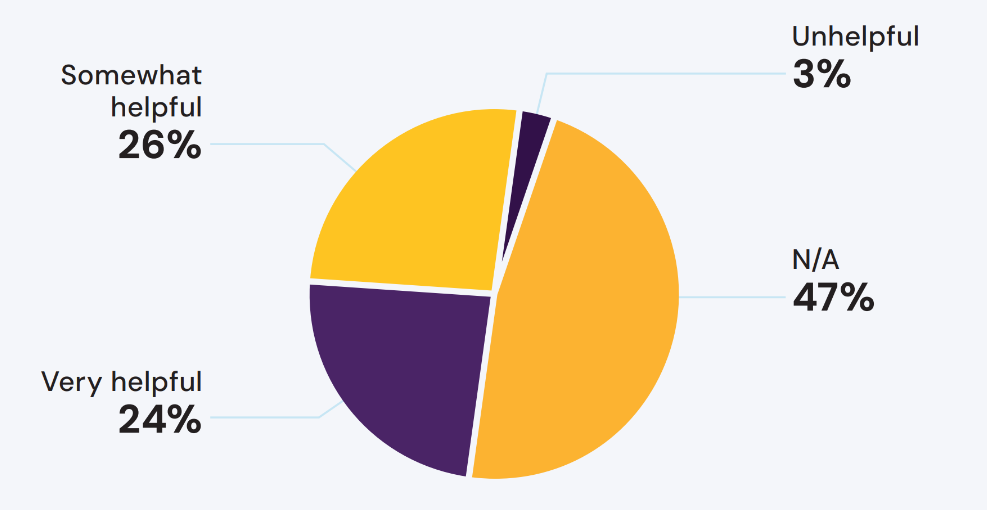
Figure 3. Participants’ assessment of how helpful government programs were
Participants shared their thoughts about how helpful, or unhelpful, they found the government support programs. (See Figure 3.) Given that most had not accessed any, the most common response was “not applicable.”
Among those who found the programs helpful, interim support such as EI, training, and tax credits were mentioned.
“Tax credits [helped] for some of the programs that the kids were in, however when the kids were 16, you couldn’t apply for them anymore.”
“Low-Income Health Care benefits really help for the kids.”
“Don’t take my wife’s disability payments away if I make more money.”
Participants said that these programs were not helpful in terms of amount and duration. Some also noted that they lost financial support if they worked and felt that the programs did not care about them.
The current policies (or past policies) have hurt workers when they were intended to help. For example, childcare costs were reduced but the number of spaces declined. A program was put in place to encourage employers to hire youth, but those who were older than the maximum age found their employment prospects limited. Although funding for certificates and training exists, it does not cover higher education such as a bachelor’s degree.
Participants noted that programs are difficult to access and are generally inadequate in both financial and practical terms. Program eligibility and accessibility were mentioned by respondents as barriers. Some said they had been disqualified because of their earnings or because their spouse worked.
Participants also described barriers related to disability and technological exclusion. As technology rapidly evolves, many people — particularly older adults and those without reliable Internet access — reported difficulty accessing education, government programs, or essential services. Government supports were often described as difficult to access due to complex application processes, strict eligibility thresholds, and benefit amounts that were insufficient to meet basic needs. Participants further described challenges navigating support systems that are fragmented across multiple programs and agencies, contributing to confusion and difficulty identifying appropriate resources during periods of crisis.
“The hoops and red tape are difficult to get through when you need help from the government.”
“It is difficult . . . to get necessary government benefits, and once you get the benefits it is always less than what you [need].”
The Way Forward
When asked what policymakers and government can do to help people find their ideal job, participants primarily mentioned controlling inflation and reducing taxes that worsen their daily hardship, providing work-related support, and expanding income support and removing barriers to accessing it.
“The government also has a big role to play here. Everybody who has any kind of income struggle and affordable issues, the food which is a basic item should be given to all because a healthy neighborhood gives less hospital visits, less poverty and less theft in society.” - PR quote
“I see a recurring theme of people ‘stuck’ in low paying jobs who seem right on the edge of being able to improve their situation if they could only access the right kind/amount of individualized support (i.e.: childcare, elder care, training, paid transportation, etc.).” — PR reflection
Control Inflation and Taxes
When the participants spoke about their financial challenges, they frequently mentioned taxes as contributing to their hardship. For those with low incomes, paying taxes on everyday essentials had a significant impact on their budget. Even small policy changes — for example, banning single-use plastic bags — can have unintended financial consequences for those already stretched to the limit.
“When you are counting every dollar, losing access to free grocery bags is a huge hit. I would reuse my grocery bags as garbage bags in my kitchen and bathroom. Now I have to purchase garbage bags as well.”
“The government should take action to control the inflation, which is major factor rising food prices.”
“Controlling prices on everyday essentials would relieve the pressure on Canadians.”
Improve Work-Related Support
Participants observed that the government should do more to help with work-related issues. They suggested strategies such as creating more jobs, including for recent graduates and underserved communities; offering training and certification for skilled workers; providing support for people who are looking for work and raising awareness of the available support options so that they are genuinely accessible; and monitoring employers to ensure they use fair hiring practices.
Participants also mentioned that policy reforms should recognize the needs of caregivers, persons with disabilities, and people facing economic hardship by offering targeted supports such as childcare, housing, transportation, and food assistance.
“Build more jobs in Canada that will support the local economy.”
Support for retraining or training for specific skills that are in demand in the current labour market was mentioned by participants. Some who were newcomers to Canada reported that they were unable to find work in their field. As a result, they were working in lower-paying jobs unrelated to their education and expertise.
“Provide paid training and education; make resources available to everyone and give awareness about how to get more support — it’s not communicated and hard to be eligible for things.”
“Provide supports for individuals in circumstances that don’t allow them to work full-time for whatever reason (childcare, elderly care, etc.); if policies were in place to offer to people who are caring for sick and elderly at home, it would allow them to work full-time.”
“Create more incentives for people to work and improve their work situation by making policy to support people in their quest for better work (i.e.: affordable housing, pay for schooling and transportation, food supports, etc.).”
Expand Income Support and Remove Barriers to Access
Participants felt that the minimum wage is not keeping up with inflation and suggested a cap on the cost of utilities, rent, and food, and a universal basic income, increased social support, and assistance with housing costs. Rising inflation has left workers struggling to make ends meet — wages remain stagnant and are increasingly insufficient to cover basic living costs. People who receive disability payments are finding the current support is inadequate; many are unable to cover their essential bills.
One suggestion was that the government should try to raise the hourly pay of workers to reflect the current cost of living.
“A guaranteed income program seems like a great idea.”
“We’ve been getting this 2% raise but overall, that only works out to maybe $35 a pay cheque, so even with raises it doesn’t meet the cost of living.”
“Make minimum wage higher so we can actually feed ourselves.”
“I am currently on disability payments, and it is not sufficient to pay all the bills.”
“The government should increase the money for people who are on ODSP for food, because everything is so high right now and they can’t afford anything.”
Other suggestions included support to manage ancillary costs that impact people’s ability to access and maintain employment (transportation, childcare, food) and amendments to current government programs such as disability support programs, which are limiting and difficult to access. Participants also indicated that removing barriers for individuals who are employed but still need access to various government programs would be helpful.
Conclusion
“The government should look at individuals as their greatest asset . . . if they were supported better while trying to increase their earning potential through education, they would be able to pay taxes and finish their education at an earlier date, which would better support the programs they’ve had to utilize in the past.” — PR reflection
The findings from the CBR project highlight the often-overlooked struggles of individuals who are employed but continue to face food insecurity and crises that threaten their well-being. Many participants reported not earning enough from employment to cover their basic needs, pointing to systemic gaps in wages, affordable housing, and access to support services. Their experiences reveal that employment alone does not guarantee stability or food security, especially during times of personal or economic crisis. These findings underscore the urgent need for stronger safety nets, community-based interventions, and policy changes that support working individuals and families.
Furthermore, the research emphasizes the importance of listening to lived experiences to inform more effective and equitable solutions. Participants voiced a clear need for more responsive support systems — ones that are accessible, respectful, and tailored to the realities of working people facing hardship. By making their voices heard, this project not only sheds light on hidden challenges but also calls for a collective response that includes government, community organizations, and employers. Addressing these complex issues will require long-term commitment and collaboration. That begins with acknowledging that food insecurity among employed individuals is a systemic failure — one that we all have a role in addressing.
“Times have changed and costs have increased beyond wages. These issues can be addressed to help working Canadians afford necessities like food and housing and a life beyond basic needs. The government needs to put money where the problems are.”
Acknowledgements
We would like to extend our sincere thanks to our peer researchers for their dedication, insight, and partnership throughout this project. Your contributions were invaluable in shaping the research and amplifying community voices. We are also deeply grateful to the participants who shared their experiences with honesty and courage – your stories are at the heart of this work, and your willingness to speak out helps drive meaningful change.
The research included in this report was funded in part by the Walmart Foundation and Enterprise Mobility Foundation. The findings, conclusions, and recommendations presented in this report are those of Food Banks Canada alone and do not necessarily reflect the opinions of the Walmart Foundation and Enterprise Mobility Foundation.