OVERALL FINDINGS
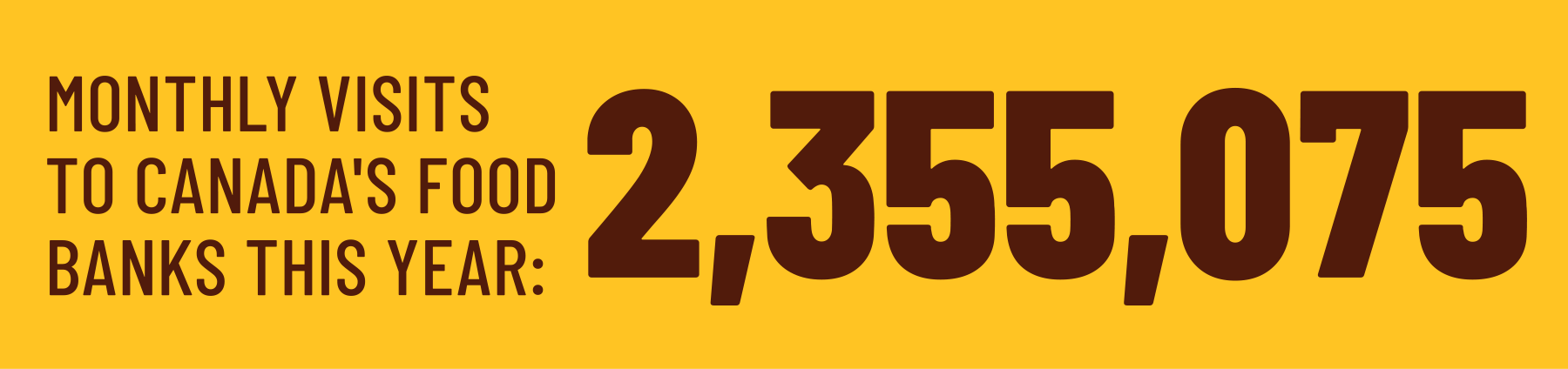
Food banks across the country continue to set new records. This year, they recorded 2.35 million visits in a single month, 117% higher than in 2019 and nearly 9% higher than last year alone.
These numbers reflect years of mounting pressure on household finances. Rising housing costs, insufficient housing supply, food inflation, economic uncertainty, and inadequate income supports have steadily eroded the financial resilience of millions of people across Canada. As a result, setbacks that were once manageable are increasingly pushing households into crisis.
This year’s HungerCount tells the story of what happens when people run out of options and are forced into impossible trade-offs to meet their basic needs.
THE DATA
Canada
| ALL |
|---|
| Total Visits | 2,355,075 |
|---|
| Total Visits (Child) | 775,658 |
|---|
| % Change in Total Visits 2025-2026 | 8.7 |
|---|
| % Change in Total Visits 2019-2026 | 116.8 |
|---|
| Total Meals and Snacks | 3,606,171 |
|---|
| Food Banks Reporting | 2,575 |
|---|
18%
14%
9%

20%
3,606,171
Help Us Drive Change
Donate.
Volunteer.
Advocate.
POLICY RECOMMENDATIONS

OUR METHODOLOGY

The annual HungerCount is Food Banks Canada’s signature report documenting food bank use in Canada. It is a cross-sectional census survey of most food bank agencies, organizations, and programs, within and outside of the Food Banks Canada network. The HungerCount provides a point in time snapshot of food bank use in Canada.
Food Banks Canada is always looking for ways to improve the HungerCount report. If you have questions about the report, or ideas on how we could improve it, we would like to hear from you. Please get in touch at info@foodbankscanada.ca and put HungerCount in the subject line of your message.
To learn more about our data collection and analysis processes for HungerCount 2026, click here to read the full report.
Read our Full HungerCount Reports Below