

Unpacking Poverty
The Poverty Report Cards represent how well the federal, provincial and territorial government’s poverty reduction efforts are going. As poverty stems from multiple factors, including the cost of housing, everyday expenses, and the quality of the social safety net, the Report Cards examine how poverty is experienced across Canada and where federal and provincial/territorial policy improvements are needed.
POVERTY
REPORT
CARDS
- Provincial/Territory Report Cards
Unpacking Poverty
The Poverty Report Cards represent how well the federal, provincial and territorial government’s poverty reduction efforts are going. As poverty stems from multiple factors, including the cost of housing, everyday expenses, and the quality of the social safety net, the Report Cards examine how poverty is experienced across Canada and where federal and provincial/territorial policy improvements are needed.
* Required field
Roadmap to Change
Canada Poverty Report Card
Poverty and hunger are growing across Canada. Find out why existing measures aren’t enough and what relief is urgently needed.
Compare Report Cards
Explore how poverty and food insecurity differ by region and how they’ve shifted over time.
Map of Grades Across Canada
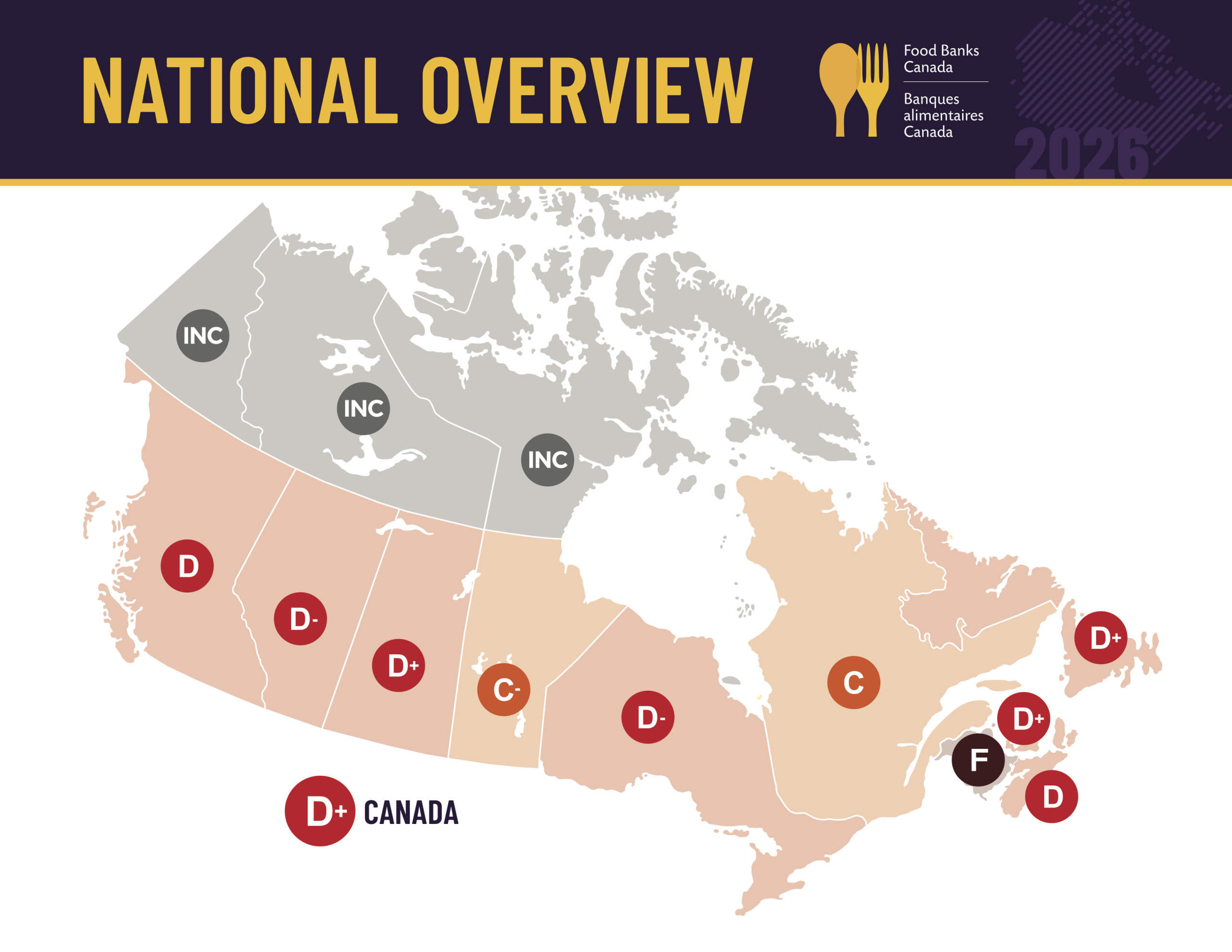
This map highlights the latest grades for the Poverty Report Cards in each province and territory, offering a national snapshot. Download the image for use in reporting, analysis, and public education on poverty trends across Canada.
About this Report
Authors
Phil Ozga – Chief Network and Government Relations Officer
Shawn Boyle – Manager, Advocacy & Government Relations
Oona Palmer – Policy and Advocacy Officer
Dana Vreeswijk – Policy and Advocacy Officer
About Food Banks Canada
Food Banks Canada is the leader in addressing food insecurity in Canada. Our mission is to provide national leadership to relieve hunger today and prevent hunger tomorrow in collaboration with the food bank network. For over 40 years, Food Banks Canada has been dedicated to helping people living in Canada with food insecurity. Over 5,500 food banks and community organizations come together to serve our most vulnerable neighbours, who – this year – made almost 2.2 million visits to these organizations in one month alone, according to our 2025 HungerCount report.
Copyright © Food Banks Canada 2026