

Most people have felt pangs of hunger at some point, if only for short-lived reasons such as missing a meal during an exceptionally busy day. Now imagine experiencing hunger regularly, without necessarily being able to satisfy it when you want to.
It’s not surprising that food insecurity can contribute to poor mental well-being. On the flip side, those dealing with mental-health challenges may struggle to secure an income that meets their basic needs, contributing to food insecurity. For some, it can become a sustained cycle.
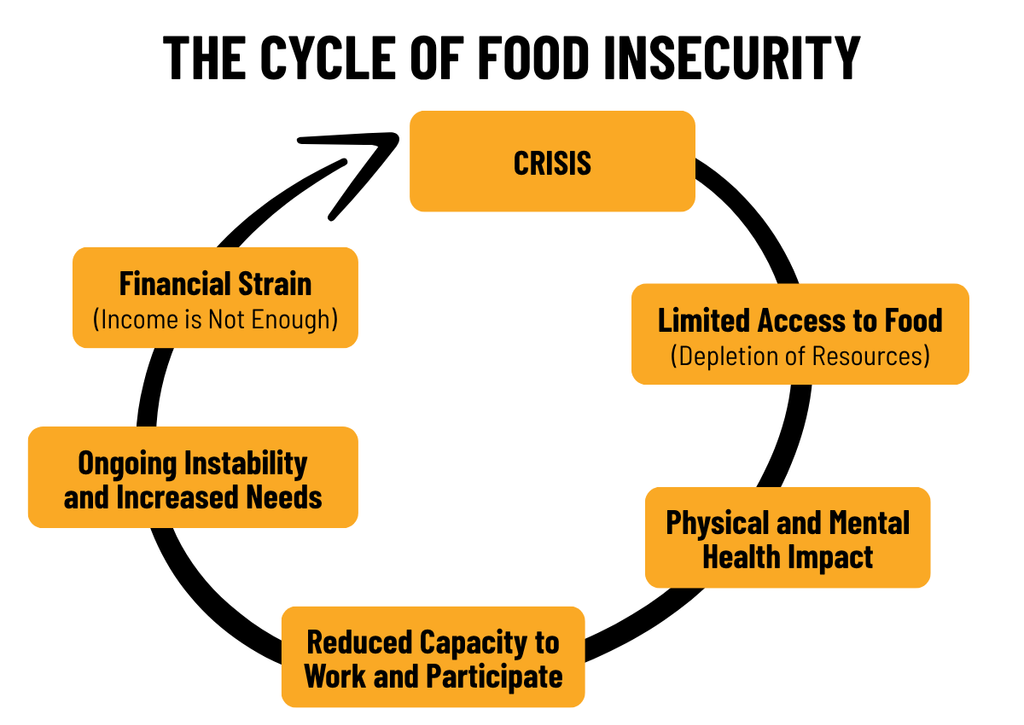
From “Understanding the Impact of Food Insecurity: Findings from a Participatory Action Research Study.” Food Banks Canada. 2026.
The correlation between food insecurity and mental-health struggles is well-documented in academic research. Recent surveys have found a link as well. In the most recent available public microdata from Statistics Canada’s Canadian Community Health Survey (2021-22), 28.5% of Canadians experiencing food insecurity rated their mental health as “poor” or “fair,” compared to 11.6% of those who were food-secure.
And in a survey of Canadian adults conducted by Pollara with Food Banks Canada for our 2026 Poverty Report Cards, people who identified as “food insecure” were more likely to agree that their mental health impacted their ability to find work, work effectively, or maintain their finances (41%), compared to those who identified as “food secure” (16%).
Food bankers want action: in Food Banks Canada’s latest annual HungerCount report, 62% of food bankers identified improved mental health services as a top policy priority to help reduce hunger in their communities. An increasing number of them report that “unmet mental-health needs, limited access to treatment and supports, and the financial impacts of living with mental illness are contributing to rising demand for food assistance,” according to HungerCount 2026.
Anxiety and Depression
In a recent Food Banks Canada research report called Understanding the Impact of Food Insecurity: Findings from a Participatory Action Research Study, participants described having to make “impossible” decisions between essentials such as paying rent or buying food. The chronic stress of managing insufficient resources and the uncertainty about being able to meet basic needs often contributed to anxiety and overwhelm.
These effects can last longer than the experience of food insecurity itself. According to the report, respondents described “a persistent sense of scarcity, characterized by ongoing worry, future-oriented planning, and anxiety related to food access” that often persisted even when their financial circumstances improved. One participant described it as a “mental scar” on their decision-making.
For another person who faced hunger as a child, the experience “created lasting emotional strain, including embarrassment, anxiety about running out of food, and a deep sense of responsibility that shaped her mental health well into adulthood,” according to a peer researcher.
Depression can enter the picture as people experience feelings of hopelessness around their situation. “I feel very drained,” explained one study participant, “like I’m just struggling to survive.”
Broad Personal Impacts
Food insecurity is not an individual person’s failure; it’s a societal-level failure shaped by factors ranging from economic inequality to unaffordable housing. But people who experience it may still, unfortunately, feel ashamed. “These emotional responses were often compounded by internalized beliefs about self-sufficiency and success,” notes Understanding the Impact of Food Insecurity.
Food insecurity can also bring chronic physical effects that can add to the strain on mental health, such as lower energy, irritability, and difficulty sleeping. To compound matters, a number of research participants with medications for their physical or mental health described not filling them due to the cost.
Moral support from other people can be hard to come by as well: study respondents frequently mentioned food insecurity as a barrier to getting out, because many social activities require spending money or sharing food. “What you need in that time is community,” said a participant, “and [food insecurity] isolates you.”
Systemic Solutions
How can we help people break out? Clearly, there’s an opportunity for coordinated responses that address both poor mental health and food insecurity. However, to reduce overall rates of both challenges, we need solutions that tackle their root causes. The experiences shared in Understanding the Impact of Food Insecurity demonstrate that these could include strengthening income security (e.g. adequate and accessible disability supports, employment insurance, etc.) and tackling the broader affordability pressures that limit people’s ability to meet their basic needs. By addressing the systemic conditions that contribute to financial strain, we can help ease hunger and the anxiety, shame, isolation and hopelessness that are often tied up with it.

